The Re-enchanted Ear
Reflections on the Orgelpark Symposium 2026

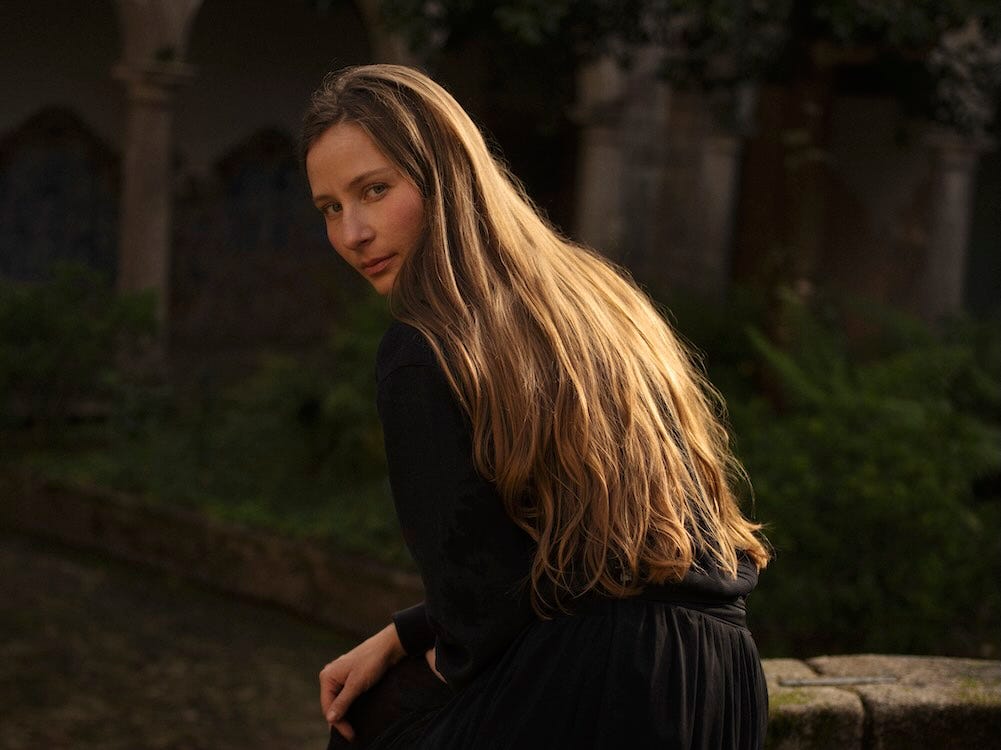
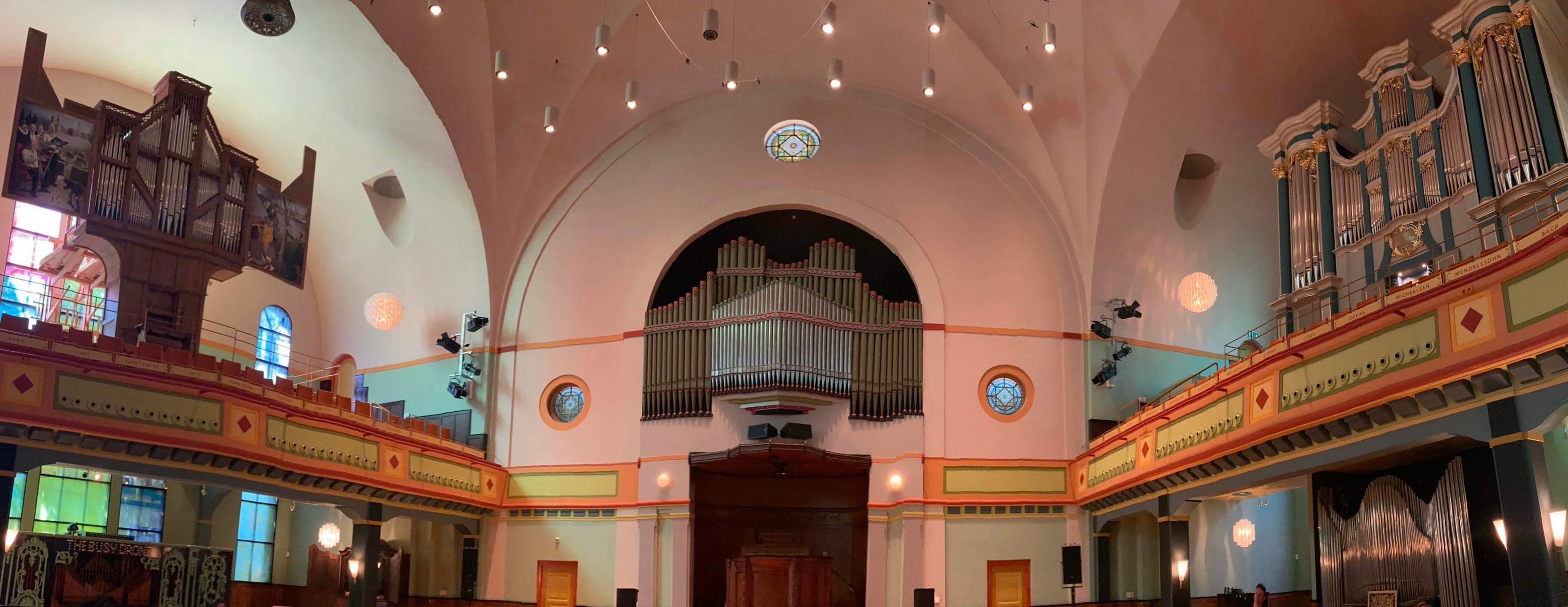
I was asked to present the closing remarks at this year’s Orgelpark Symposium, a three-day festival of new music for organ and electronics presented at Het Orgelpark, Amsterdam, last week in collaboration with 4DSOUND, the Richard Thomas Foundation, and the Hamel Foundation. The symposium – titled ‘Situational Musicking’ – featured performances and talks from Kara-Lis Coverdale, Sarah Davachi, Claire M Singer, Maria W Horn, and others.
I want to start with an idea, which I hope will serve as a guide through the practice of the past few days. That idea is this: we live today with disenchanted ears.
It was Max Weber who described modernity as ‘disenchanted’. He wrote of a world stripped of ‘concrete magic’ — where the tangible, everyday enchantment of the past had given way to a totalising rationality; a regime in which everything answers to logic. Weber wrote of modernity more widely, but this – I think – is a listening posture, too. One that, a century on, has become the default. Sound in the broader culture today is often neither ‘concrete’ nor ‘magic’. It is digitally mediated, algorithmically disseminated – composed, even, by AI – and it is rational: designed for instant legibility within a constant stream of information. Sound today – for the disenchanted ear – is ‘content’: a pre-packaged, frictionless commodity. Something to be ‘consumed’ and then discarded.
But over the last few days, we have experienced the opposite. Together, we sat with sound in all its complexity – sound that often changed slowly, that was tangible and present, that rewarded close listening and refused easy resolution: it was neither straightforwardly old nor new, acoustic nor digital, mechanical nor organic but something altogether messier and more interesting. More than once, I found myself gladly mystified – asking: where did that sound come from; what made it; what is that key or pedal or laptop controlling? And so, just as tone was sustained, so was listening. I think Hans Fidom [Professor of Organ Studies at VU University Amsterdam; Leader of the Orgelpark Research Programme] put it perfectly in his introductory essay: it is this music’s steadiness, paradoxically, that opens our ears to its instabilities – to that beat, shimmer, and drift.
I want to suggest therefore that these performances re-enchanted the ear. The American philosopher Jane Bennett describes enchantment as ‘a feeling of being connected in an affirmative way to existence; it is to be under the momentary impression that the natural and cultural worlds offer gifts.’ This idea – that modernity hasn’t extinguished enchantment so much as displaced it (into art, nature, and other now marginal domains) – was, I think, made audible over the last several days. For a while, we listened for, and received, those gifts.
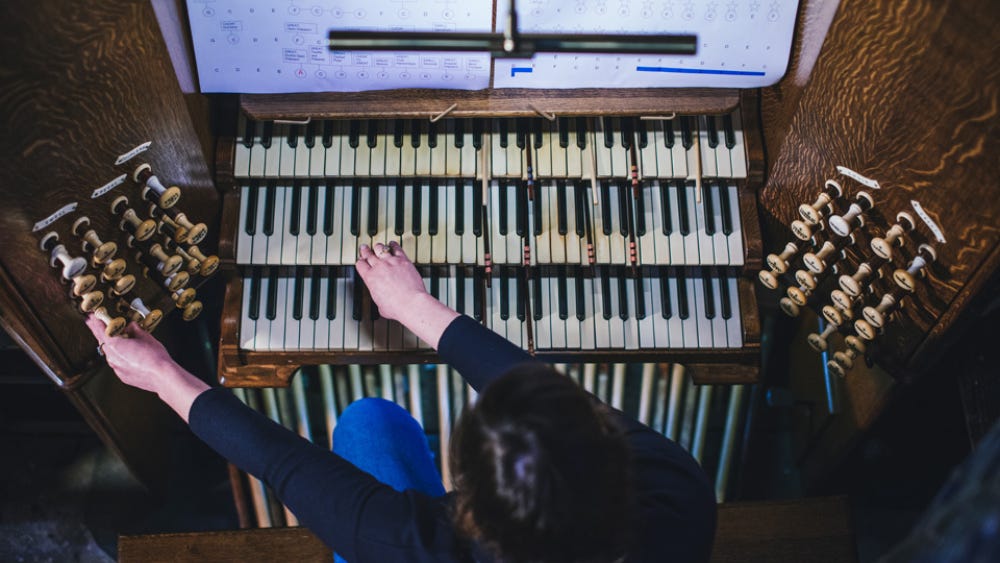
Claire M Singer’s piece Soar on Thursday evening was, for me, a perfect encapsulation of this enchantment. Involving five of the organs here – and no small amount of cardio as Claire ran up and down the Orgelpark’s stairs – the performance enveloped us in sound. Beginning in air, it grew steadily in its scale and heft – note added to note, organ added to organ – to create music that was not so much monolith as swaddle; music that lived in the space, and whose solidity was not a wall, but an embrace; that connected us in an affirmative way to existence.
Sarah Davachi’s recital later that evening pursued that same feeling of presence, but through subtraction rather than addition. Where Claire enveloped, Sarah reduced; holding sound in place to examine each note’s texture and weight; its colour and pulse, the chiff of its onset, and the bloom of its decay (Kara-Lis Coverdale enlisted to unplug the organ’s blower at the end of the performance). Borrowing Sarah’s own terminology, this was sound as ‘phenomenological’ rather than ontological; as experience rather than abstraction. Performing on the Van Straten organ, triads (uneven in their tuning) opened into octaves, then into the spectra that make up each note’s aura. There was line, of course, and harmony, but these were not resolved within a rational system; not ‘functional’ so much as sustained, turned over for the depth of their sensation rather than where they were going. And there was history, too: a temperament from before equal temperament had flattened the world; a reminder, perhaps, that our ‘rational’ ear is more recent, and less fixed, than we may imagine.
The electroacoustic works pushed this instinct further. Robert Curgenven’s extraordinary Unstable Steady States dispersed tone in 4DSOUND, drawing on samples of Nordic and Irish organs, and setting tuning systems against one another to conjure vivid interference patterns. The organs’ pipes were here diffused – a colour field without any single source, making luminous use of the ‘invisible’ omnidirectional speakers of the system. If the Van Straten, the Utopa, and the other organs here ‘live’ in the reverb of the room, then this was the air made instrument; a sonic architecture, with us inside it. And through that vibration, there was connection to something bigger than ourselves; a feeling of awe, of our own reassuring smallness. Stepping out into the Amsterdam sunshine for lunch afterwards I found I needed – as Richard Thomas had warned – time to recover. That is a mark of re-enchantment; it persists. As Sarah said in her talk this afternoon, my ‘reality was – fleetingly – reconfigured’.
Jasmine Karimova’s songs – which opened the symposium – made a connection between the breath of the organ and the grain of her voice; both intimate and nostalgic. The beauty of each, it seemed to me, lay in its fragility – in the inevitability of its evanescence. Amarante Nat’s Love in the Meantime likewise brought the chamber organ into dialogue with vocality. Here, though, pitch was sustained precisely and with absolute focus; the voice tracing the contour of the organ’s chords. If the other pieces I have described pursued sound as force – exterior and muscular – then these works inhabited that same sound’s interiority, its relation to the uneven terrain of the body.
Of all the performances, it was Jakob Lkk’s Cormorant 2775 – a portal into our ecologically ravaged future – that most resisted any single reading. The Waldorf synthesiser, ribbons, photographs, and – of course – the hyperorgan (modified with expression pedal and breath control) coalesced in a gloriously irreconcilable cyborg performance. This was La cathédrale engloutie meets Suzanne Ciani; granular, vitreous synthesiser tones evoking the imagined underwater sounds that Jakob describes in the work’s programme note, those ‘rustling pipes and singing bells’. And the organ was, of course, revealed to be a synth itself; a machine with which to conjure and sculpt sound; an instrument of additive synthesis, of filtering and resonance, of partials. This de-normalisation – what Viktor Shklovsky called ‘defamiliarization’; the revealing of strangeness that was always there – reached into the idea of ‘performance’ itself. Performance here was not so much a presentation as a situation; a theatre of objects, instruments, and their attendant sounds and meanings. Here, again, I want to return to that thread of re-enchantment, because this act of theatre revealed, for me, precisely the magic and wonder – those ‘gifts’ – that modernity has concealed from us.
Maria W Horn’s Somniorum shifted this sense of enchantment beyond the human, situating ‘magic’ not in the body of the performer, but in the mechanisms of the pipes, the MIDI of her composition. Composed using the Orgelpark’s hyperorgan console, this was – on the one hand – a work ‘performed’ by a robot. But my experience was not of a coldly procedural automaton, but of – to borrow Gilbert Ryle’s term – the ‘ghost in the machine’. That is, in placing this music beyond the reach of the human hand (for example, in those beautifully shifting arpeggiated patterns of the second movement), the piece revealed the paradoxically human side of the organ: its imperfections and instabilities that Maria so sensitively intuited to be more subtle and more interesting than any Frank Zappa-esque frenzy. That chiff, the slight delay as the pipe began to speak: this was the organ’s body and breath made audible.
Jürgen Scriba’s ‘linear valve’, demonstrated this afternoon, intervened – it seemed to me – in that same life of the organ, enabling an expressivity that was harnessed enthusiastically by [artist collective] Sound Rebellion. Working hands-on with the pipes, they revealed the partials hidden within the fundamental; characteristics amplified by distortion and processing. The tactility that was obscured by the mystifying interface of the hyperorgan or laptop were made legible; more concrete but no less magical. Mauricio Silva Orendain’s practice, too, inhabited this beautifully haunted landscape of pitch between pitch; the connection to [16th-Century music theorist] Nicola Vicentino – like Sarah’s work on the Van Straten – reaching back through time to tone not yet constrained by rationality.
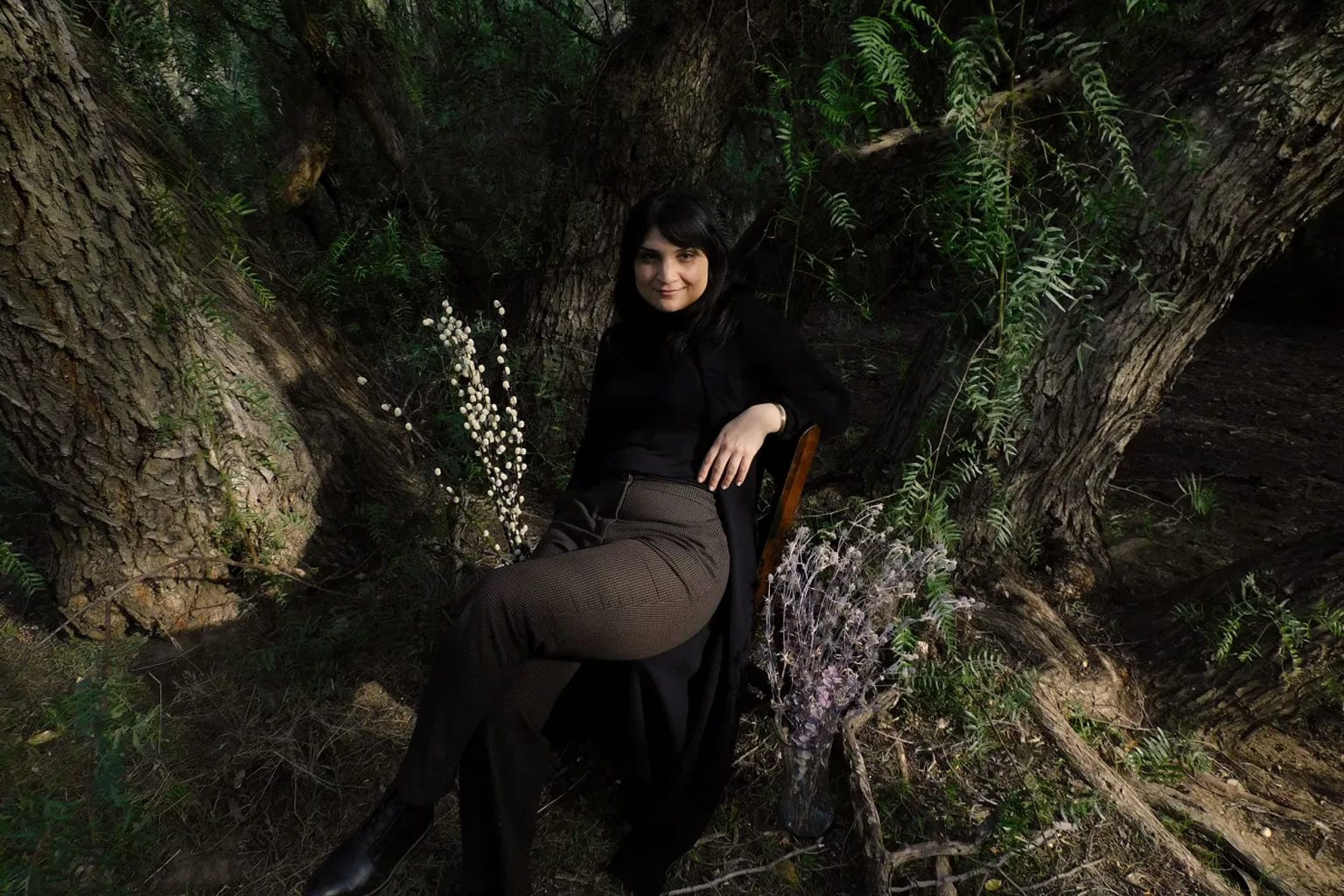
If Maria and Sound Rebellion located the organ’s life in its mechanism, other works asked where sound lives once it leaves the pipe. Claire’s Ode to Soar — performed later that evening, after Soar — took her organ-practice into 4DSOUND, combining its tones and timbres with electronics, and working with [4DSOUND’s spatial sound engineer] Joris Takken (whom Claire calls her ‘architect’) to project the music in space. That points to another of the symposium’s strands: the ‘situational’ half of ‘situational musicking’. Any piece for organ is, of course, by its nature situational in that each instrument’s idiosyncrasies, each hall’s particular acoustic, will colour the work. But Ode to Soar pursued the ‘situational’ in two directions: first, the deeply situated conditions of Soar – requiring five of the organs here – were translated into the no-less site-responsive, but more portable situation of the electroacoustic performance. Second, the 4DSOUND system makes the space itself playable – space is a material with which to compose; the situation a set of coordinates in space, mapped inside a computer.
Casimir Geelhoed’s Deviations explored the dramaturgy of this conceit. He live processed the Utopa organ, transforming these sounds – plastic and animate – and projecting them within the hall. Thinking back to that morning’s masterclass, Poul’s term was ringing in my ears as I listened: 4DSOUND as an ‘architectural instrument’, a tool for interrogating ‘psychoacoustics’ and ideas of ‘spatial synthesis’. This was my exactly experience of Casimir’s piece – a richly evocative, psychoacoustic engagement with the organ’s sound. Descending pitches (recognisably ‘organ’) became whistle-tones, that became a dark, dense mass of sound, that became, then, granular and distorted. This sonic trajectory was lithe and living; an organic metamorphosis from pipe to speaker.
And if Casimir showed the potential – the plasticity – of live-recorded sound, then [turntablist NikNak] Nichole Raymond’s performance late last night took this one step further: manipulating the sounds of organs lifted from vinyl records. Tone became texture; music ‘as object’ – made concrete in the recorded medium – became grain, glitch, and static. This was ‘musicking’ (verb) with ‘music’ (noun), finding in the solidity of the form a contestability; not only the fixed document of a recording, but the material for new music. And this was magnified, I think, by the 4DSOUND system which did more than simply reproduce those samples, it unearthed in them a latent momentum; an energy that propelled them into space; into the new.
I was interested this afternoon to hear of another kind of situatedness. The situation of the organ for Kara-Lis is autobiographical – the organ not as impersonal tool, but intimately entangled with the places and people in its orbit. The situation of the performance, be it liturgical or a concert, is one of ritual. And this extends into the digital, also; synthesis as an act of commune with sound, from the smallest waveform to the ‘harmony of the spheres’.
Coming full circle, the idea of ‘in situ’ as something anathema to our time – our age of portable objects and sterile commodities – was poetically articulated by Annie Garlid in her keynote this afternoon. And those other productive dichotomies that she outlined – power and vulnerability, mobility and immobility, materiality and immateriality – speak, perhaps, to what the term ‘organcore’ risks flattening: the contradictory, unsettled nature that makes this practice living and vital. What Annie called a bedrock, I call a fertile soil.
I want to finish, then, with a final part of the picture of ‘situational musicking’ that has emerged over the past few days. If, as I hope we all agree, this music offers us something important – something beyond the digitally mediated commodities designed for the disenchanted ear – then that work needs time. It requires risk-taking, experimentation and, importantly, the resources to make that possible. That soil needs water and sunlight.
Richard, in his welcome to us, described himself as a ‘catalyst’ for composers. In our roundtable, he spoke of supporting musicians not, particularly, to produce an output but to push the language of music forward. Anja Bien [CEO of the Hamel Foundation], likewise, talked this afternoon of the importance of fostering ‘interdisciplinary infrastructures’, of supporting the artist as whole human being; supporting their (I should say ‘our’) long term development. If the extraordinary power of this music lies in sound sustained – in attention carefully paid to the depth of sensation found in its tones – then this practice must be sustained, also. Our ears need re-enchanting and for that we need enchanters. If the disenchanted ear is our default, these three days showed that it need not be our fate. This music opened my ears anew. But that posture is fragile, and it needs tending. The enchanters among us – the catalysts, the institutions, and the risk-takers – are how it survives.
I’m sure you’ve read this, but your wonderful piece reminded me of Knaussgard on enchantment https://harpers.org/archive/2025/06/the-reenchanted-world-karl-ove-knausgaard-digital-age/ Also between CMS’s physical running about and your hefty piano burying recently, I want to read you on the physical component of otherwise very still music!