Piano Garden
Annea Lockwood, Instruments, and the Making of Community

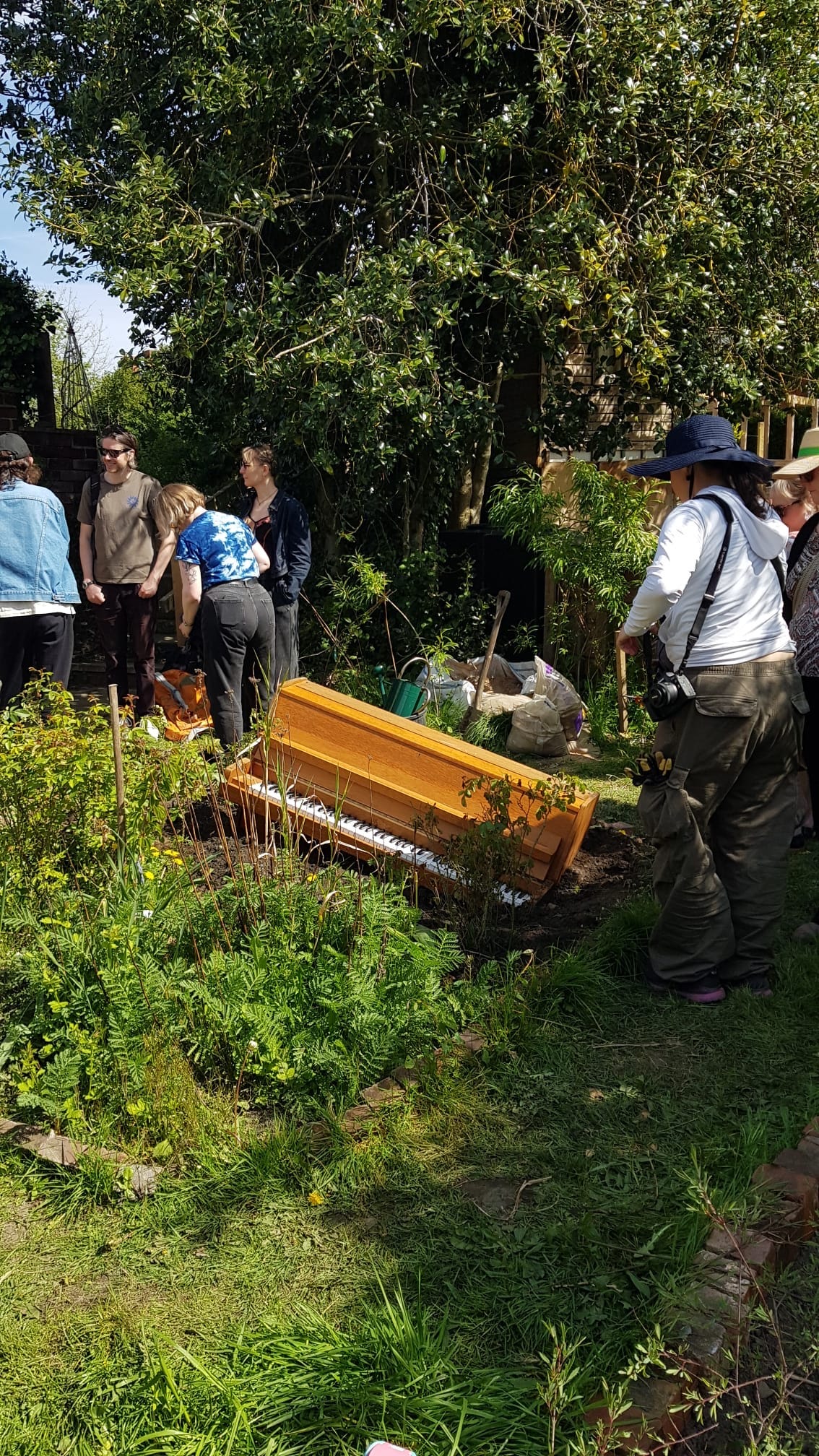
Last Saturday, we buried a piano. The evening before, we had tied fifty-or-so helium balloons to a small music box and floated it up to the high, beamed ceiling of the University of Sheffield’s Firth Hall.
Both works were created by the New Zealand-born composer and sound artist Annea Lockwood. Gone – the 2007 composition that asks the performer (in our case, the inimitable Xenia Pestova Bennett) to float away a toy piano – is typical of Lockwood’s output. Arrestingly joyful, there is something disarmingly heartening about the sight of helium balloons in a concert hall. In a space so often marked by self-seriousness, they seem to say: “Enjoy yourself. Have fun!”
As if to underscore this, once wound up and released, the music box plays a tune – Moon River. Craning their heads upward, listening to the faintly unspooling melody, that balloon-joy sweetens into an appreciation for sound, and for being together.
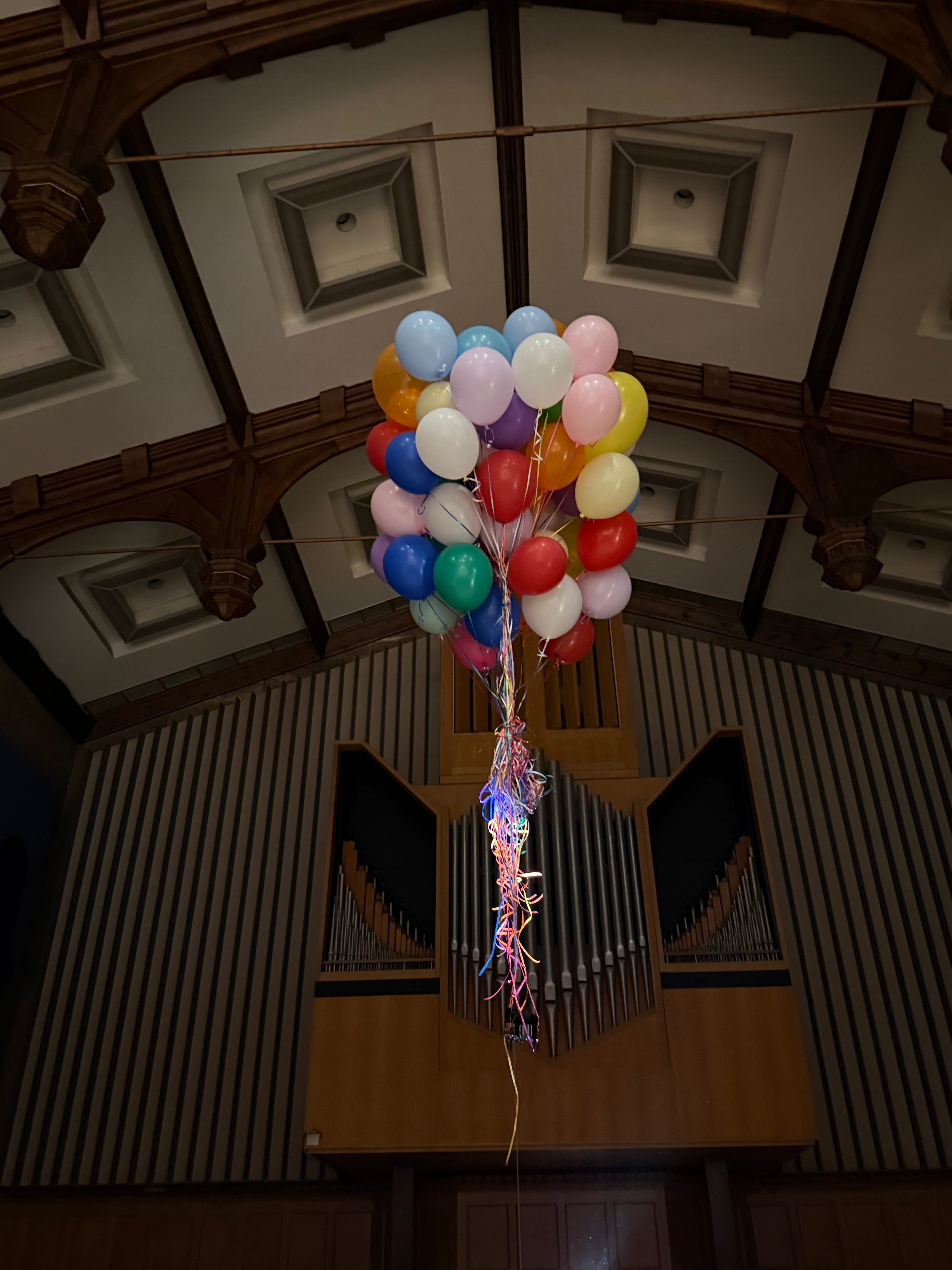
Piano Garden (1969-70), which saw us half-inter an upright piano (at the end of its playing life), is likewise playful and life-affirming. The idea is that the piano remains in the ground forever. Over time, the immutable-seeming instrument is overgrown by the apparently fragile plants, upending our assumptions about our mastery over nature. This is the established telling of the work.
We ‘planted’ our piano in Sheffield’s Woodseats Community Garden – a space run by, and for, the community. Some one-hundred-and-twenty people attended. First Xenia, then others, stooped to play the buried piano – plucking or scraping at its strings, pressing the keys to elicit a soil-dampened note or two. Some poked holes in the ground with their fingers and planted tender young plants. Others helped with the labour of securing the instrument in the ground with wheelbarrow after wheelbarrow of earth.
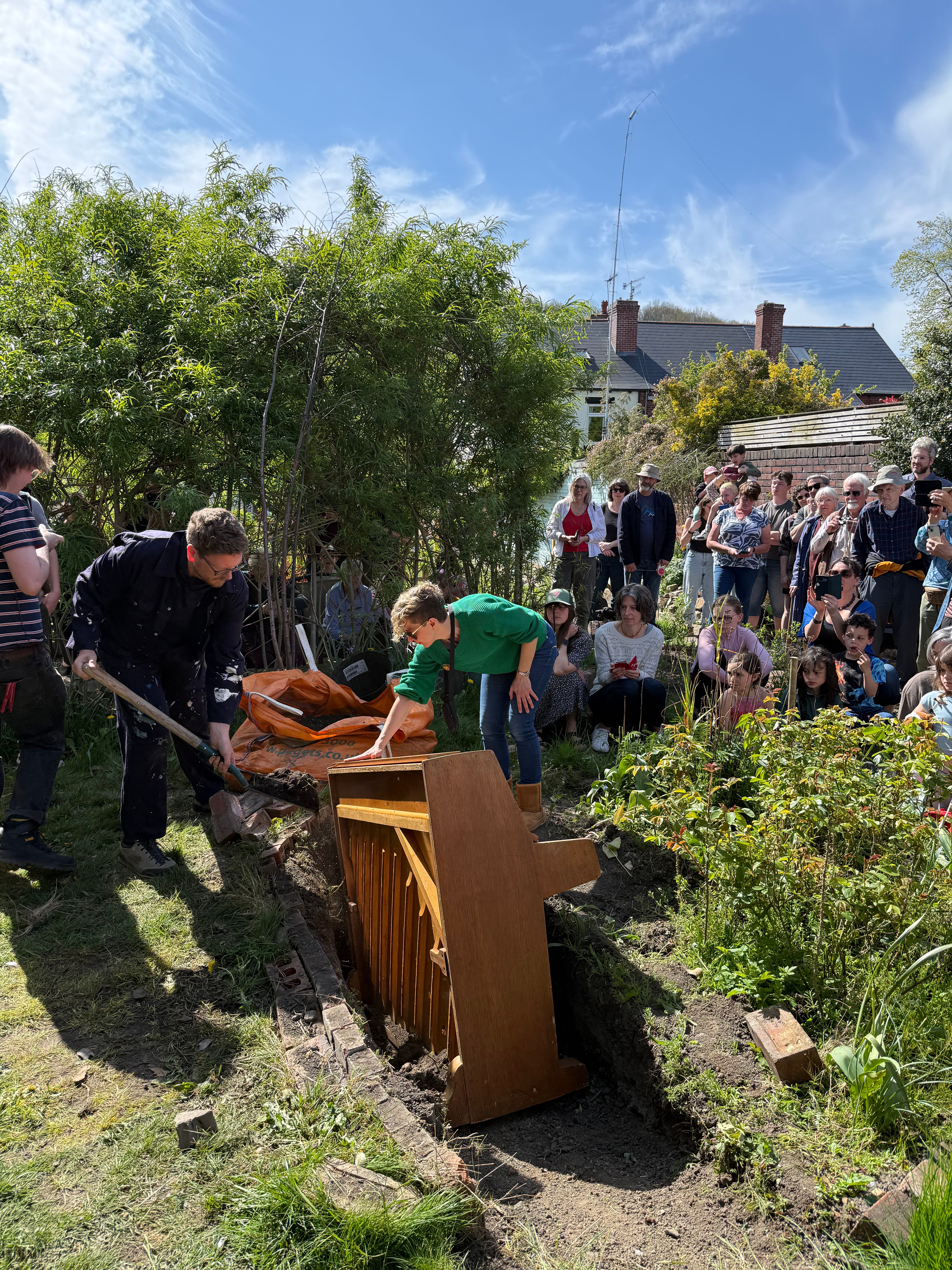
Here, a second reading of the work came into focus for me. Like Gone, Piano Garden is not really about the instrument at all. It is about what instruments can do; what happens in their orbit. A piano sprouting from the ground is delightfully absurd. That strangeness draws people in, creating a space to linger, laugh, and make something together. This is what Annea’s extraordinarily generous work does so beautifully: it builds a community of listeners.